By Tony Ingraham
The season is winding down now at Robert H. Treman State Park. Winter weather soon will force some trail closings, and the Old Mill Museum in the Upper Park will shutter until spring (by mid-November, park staff predict; check with the park for status.)
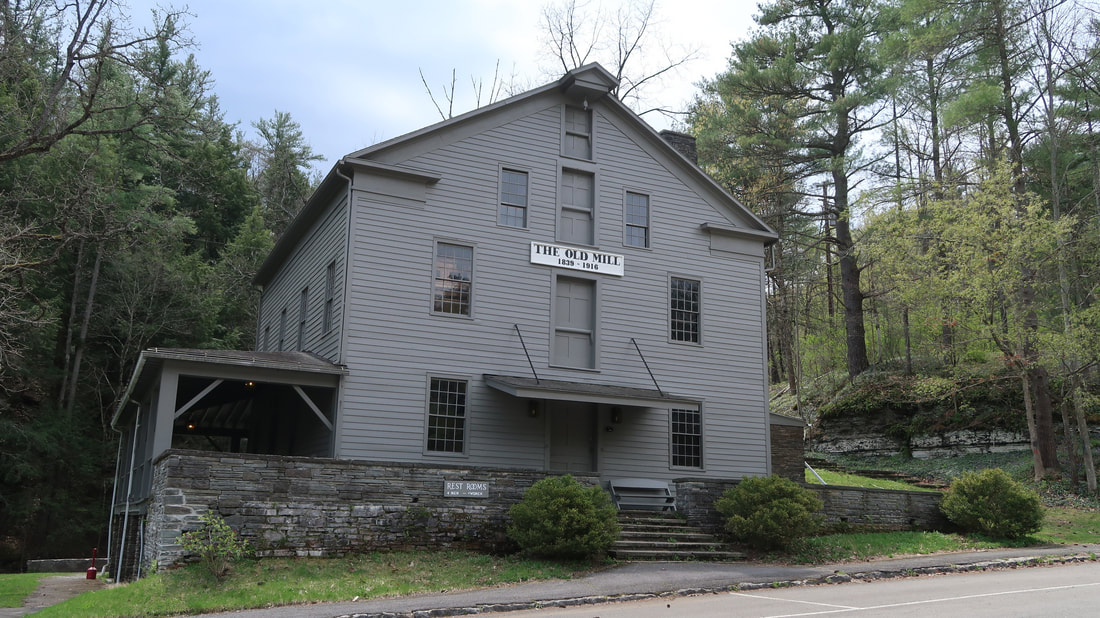
The mill museum displays a history of water power in the former hamlet of Enfield Falls that preceded the creation of the park. And there is a history to the interpretation of that history itself.
This summer, Les in the park office was cleaning out a file cabinet and she found a stack of old, five-page, typed handouts that we used to offer to visitors in the mill back in the 1970s and 1980s, and possibly earlier. I began working for the parks in 1979 and it was the only interpretation Robert H. Treman State Park had available for visitors to the mill.
The season is winding down now at Robert H. Treman State Park. Winter weather soon will force some trail closings, and the Old Mill Museum in the Upper Park will shutter until spring (by mid-November, park staff predict; check with the park for status.)
The mill museum displays a history of water power in the former hamlet of Enfield Falls that preceded the creation of the park. And there is a history to the interpretation of that history itself.
This summer, Les in the park office was cleaning out a file cabinet and she found a stack of old, five-page, typed handouts that we used to offer to visitors in the mill back in the 1970s and 1980s, and possibly earlier. I began working for the parks in 1979 and it was the only interpretation Robert H. Treman State Park had available for visitors to the mill.
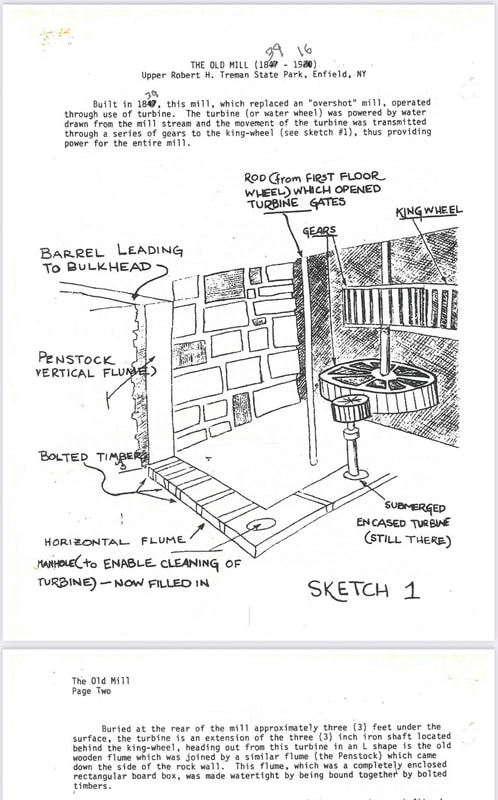
In the 1990s, I contracted a historian and a graphic artist to produce most of the exhibits you find throughout the mill today. (The Finger Lakes State Parks’ interpretive unit plans to modernize them.)
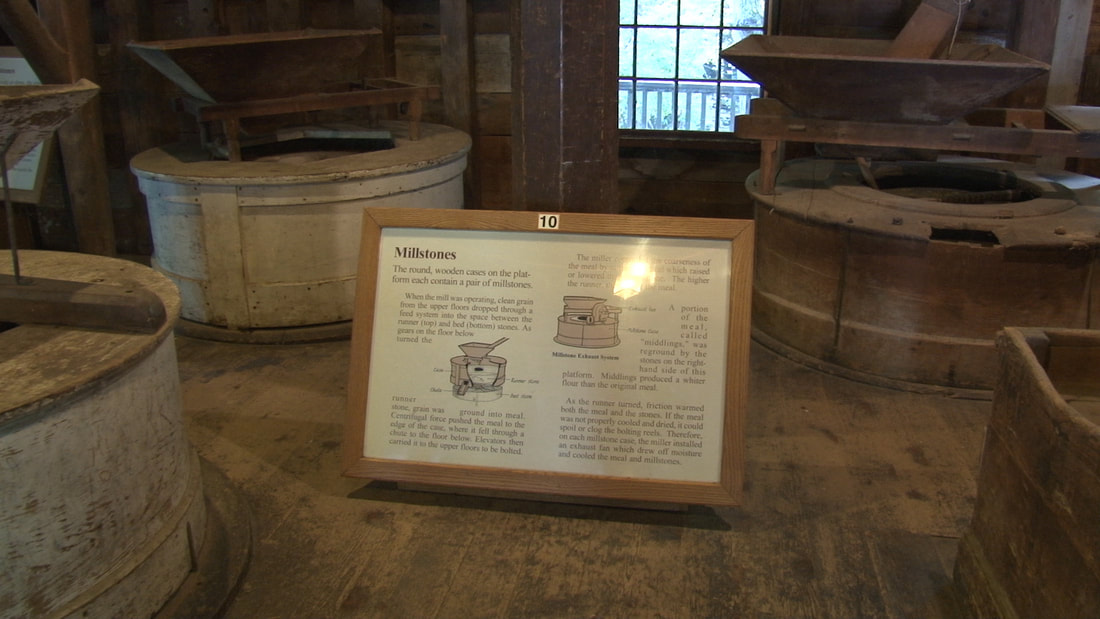
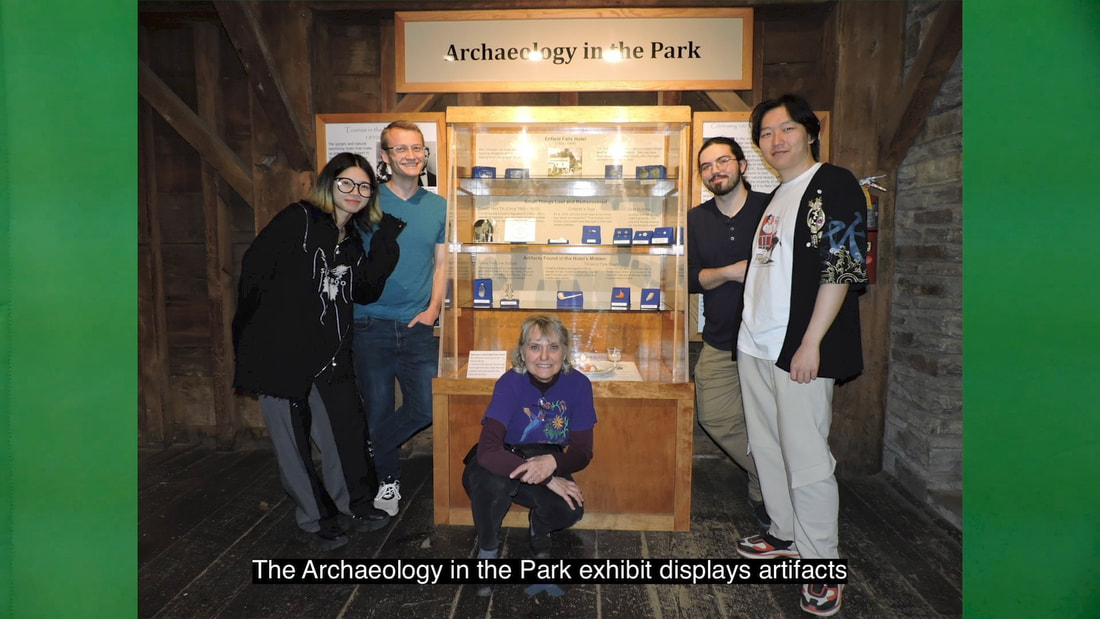
Since 1998, Cornell archeologist Sherene Baugher and her students have worked with the support of the Friends of Treman to develop and install exhibit cases and exhibit panels that tell the story of the former little 19th century community of Enfield Falls for which the mill was a centerpiece.
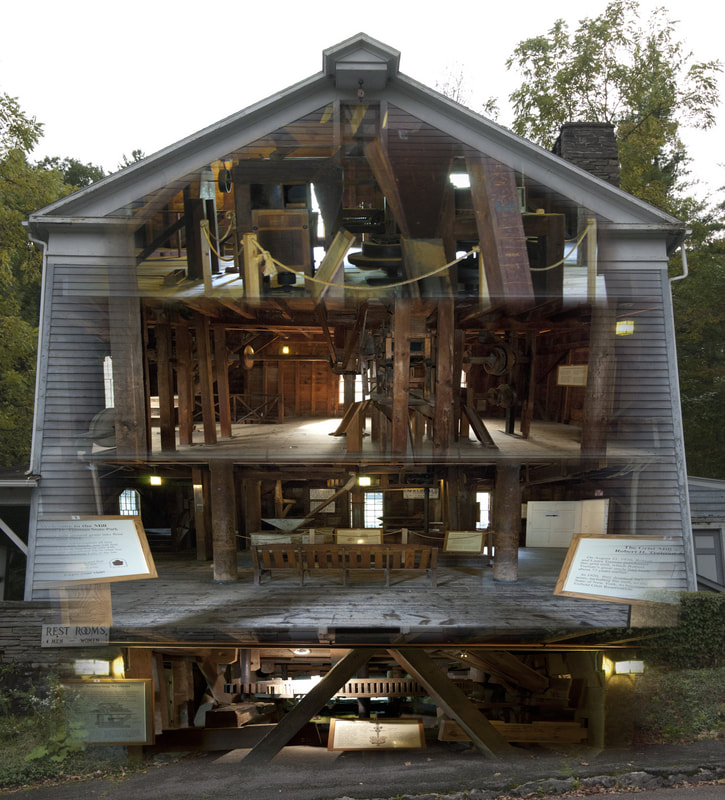
Except maybe for engineering nerds, however, I think that few visitors make the effort to fully comprehend the workings of this large, marvelous, mostly-wood, water-powered machine. Even with the aid of the many exhibits, it takes some time and attention (and stair climbing) to follow the ups and downs of grain and flour among the processes on the four floors of the museum. I think today’s casual park visitor would find it even more challenging to follow the details in that old handout that Les found in the file cabinet.
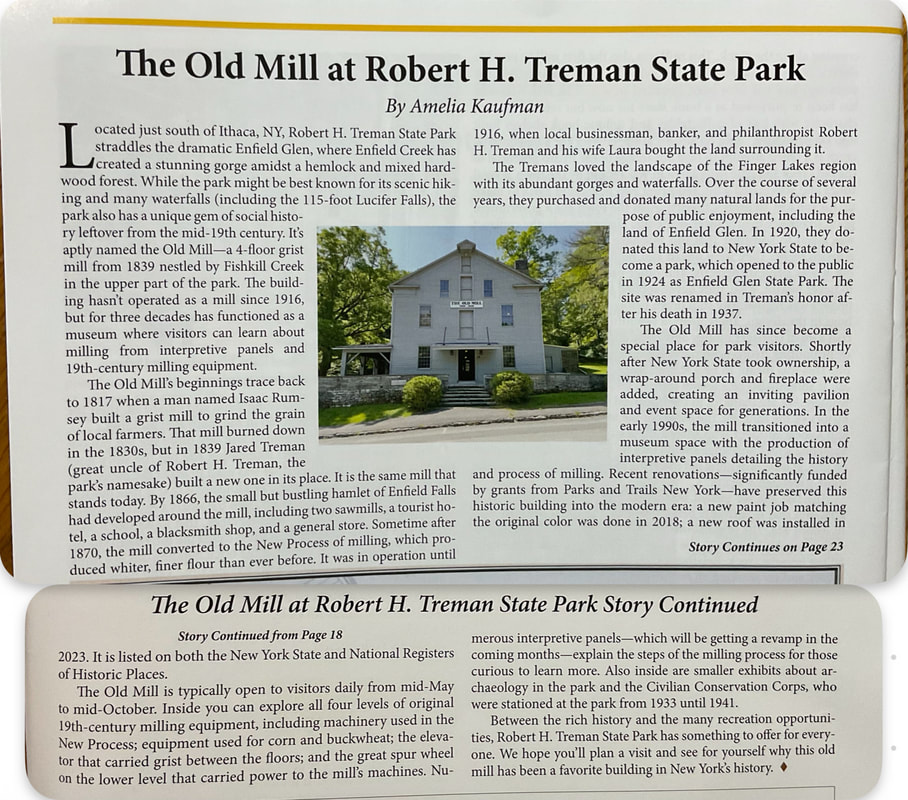
(Image below courtesy of Josh Teeter, Finger Lakes State Parks)
Even I had forgotten about that old handout. Nonetheless, I invite you to take a look at it. It may be difficult to imagine the workings of the mill without actually being in the building. I think, however, that the handout does give an appreciation of the knowledge, skill, experience, and precision it took for the 19th century millers to produce the fine flours and meal from local farmers’ wheat, buckwheat, and corn.
You can download and see the handout here.

| rhtmill-old-description_.pdf |
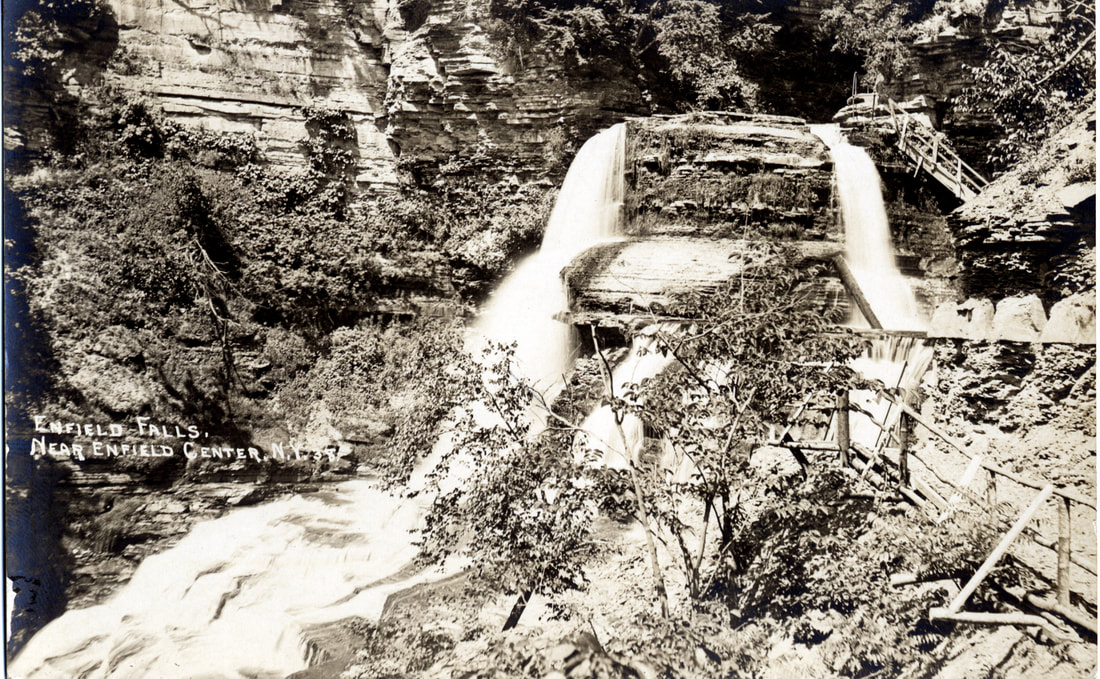
We don’t know who prepared this handout, nor when; but there is a clue. On page 2, it mentions, “A long wooden ‘barrel’ led from the top of the penstock to a bulkhead situated on the hill between the rock wall and the bridge (over the creek at the rear of this mill).”
As the photos below show.
As the photos below show.
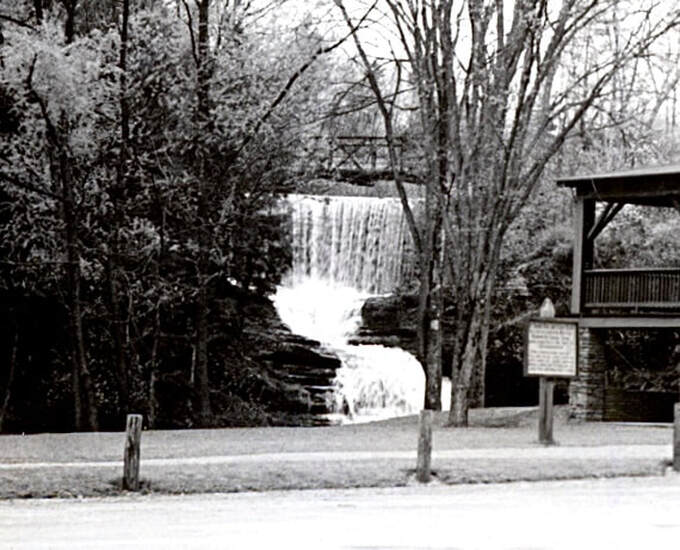
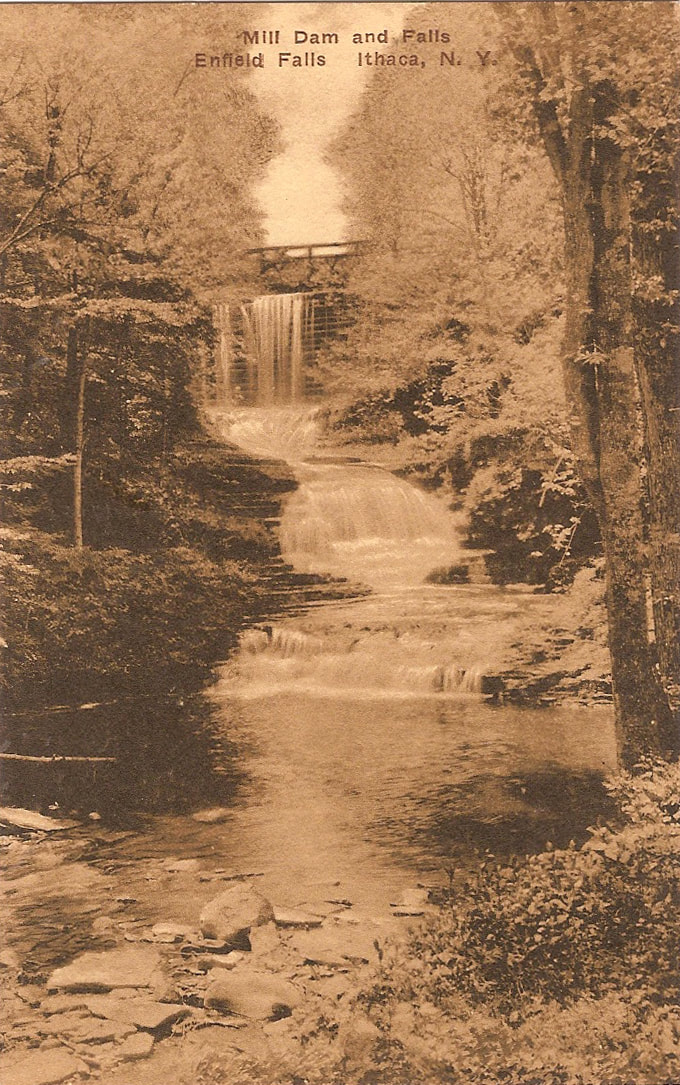
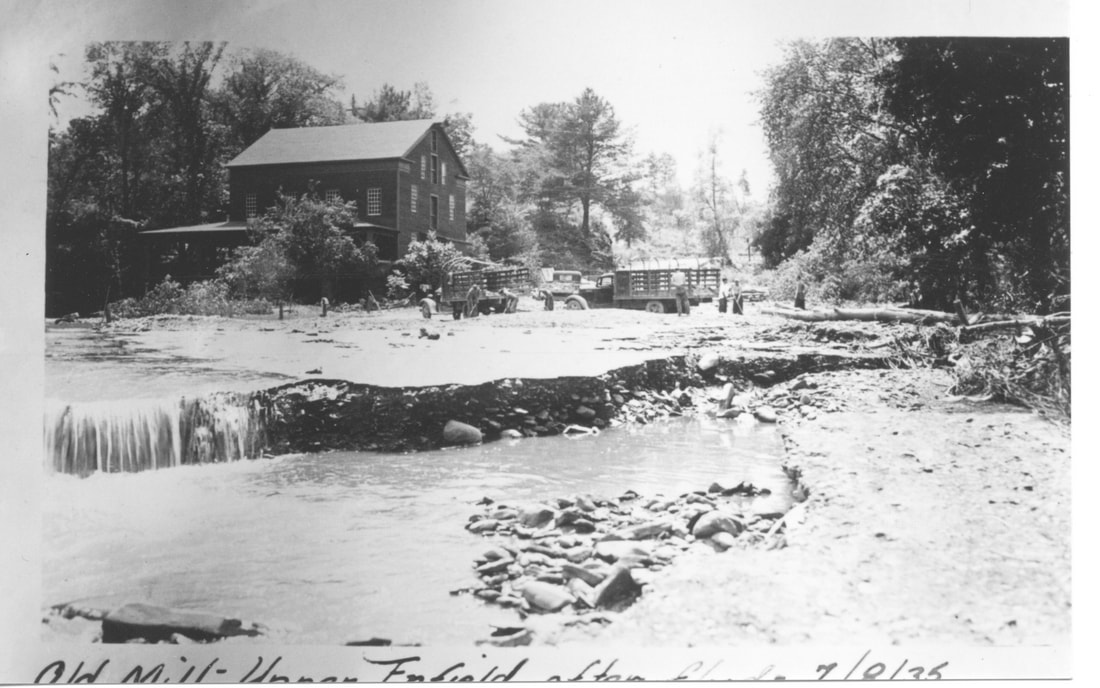
The bridge and the “bulkhead” (and the mill pond above) are long gone, blown out by a terrible flood in 1935. Might this old interpretive handout have been written before that?
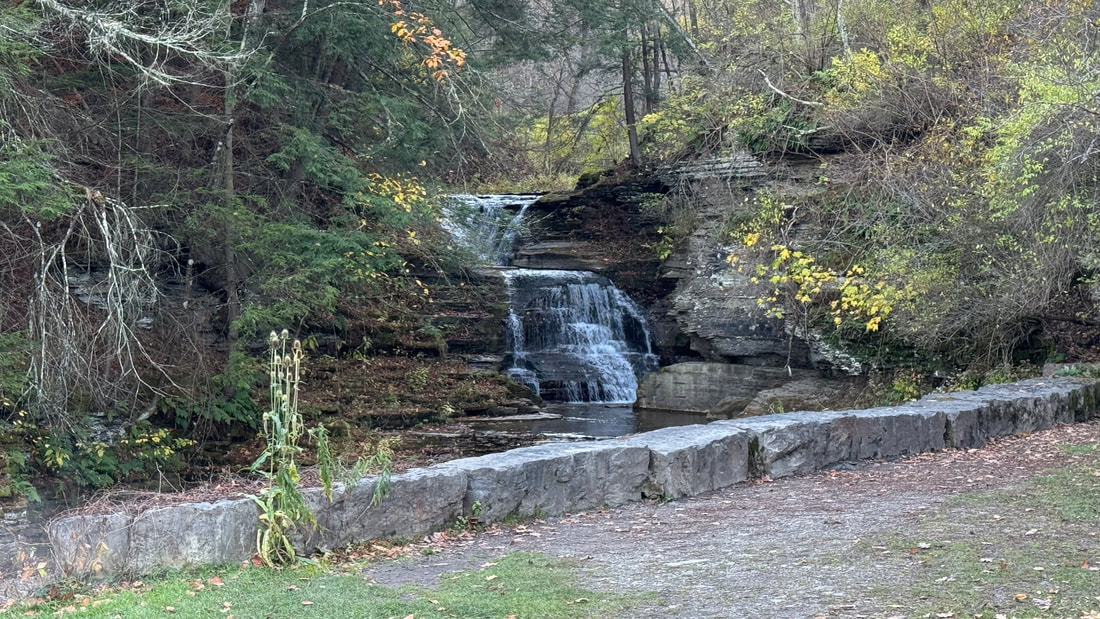
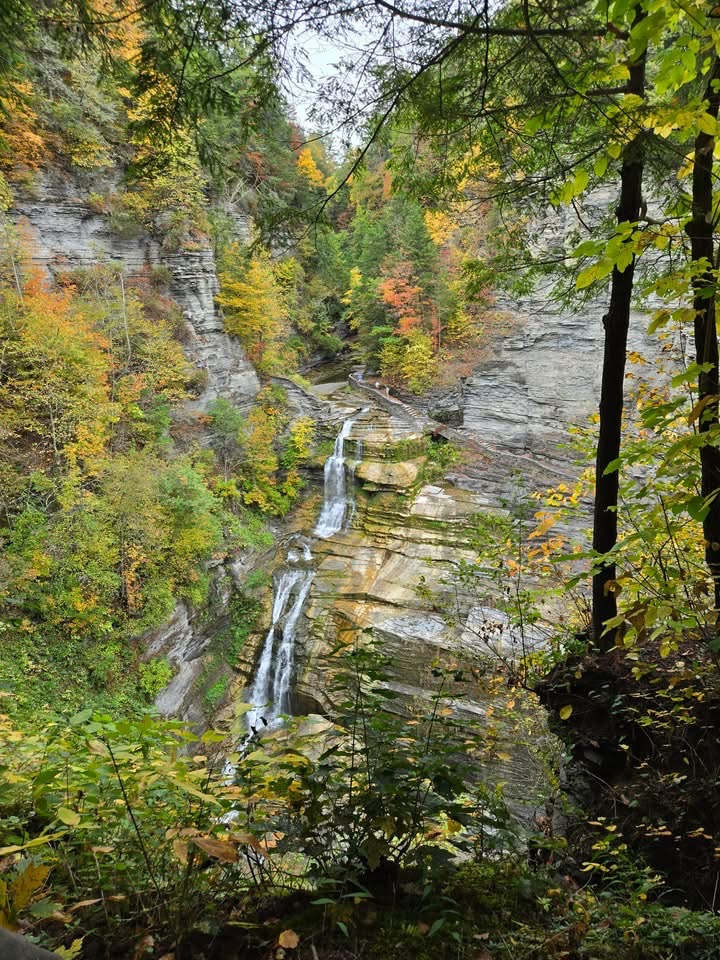
This is what the Mill Falls look like today.
 RSS Feed